How Skincare Actually Works: The Science Behind Your Daily Routine !

Have you ever stood in front of your bathroom mirror, holding an expensive serum, wondering if it’s actually doing anything? Or perhaps you’ve questioned whether your elaborate ten-step skincare routine is genuinely beneficial or just an expensive ritual that makes you feel productive? You’re not alone. The skincare industry is worth billions of dollars, yet much of it remains shrouded in marketing language, pseudoscience, and confusing claims.
The truth is, skincare is far more scientific than many people realize—but it’s also more limited than brands would have you believe. Understanding how your skin actually works, how products interact with it at a cellular level, and what ingredients can genuinely accomplish can transform your approach from expensive guesswork into an informed, effective strategy for healthier, more radiant skin.
This comprehensive guide will take you on a journey beneath the surface of your skin, exploring the fascinating science that makes skincare work—and revealing why some products deliver on their promises while others are little more than luxurious placebos.
Understanding Your Skin’s Architecture
Before diving into how skincare products work, it’s essential to understand what they’re working with. Your skin isn’t just a single layer—it’s a complex organ with three primary layers, each serving distinct functions.
The epidermis is the outermost layer and your first line of defense against the environment. The very top of the epidermis, called the stratum corneum, consists of dead skin cells bound together by lipids (fats). Think of it like a brick wall: the dead cells are the bricks, and the lipids are the mortar holding them together. This barrier prevents water loss from inside your body and keeps harmful substances from penetrating inward.
Beneath the epidermis lies the dermis, which contains collagen and elastin—the proteins responsible for your skin’s firmness and elasticity. This layer also houses blood vessels, nerve endings, hair follicles, and oil glands. When we talk about anti-aging skincare, we’re primarily concerned with protecting and supporting the dermis.
The deepest layer, the hypodermis, consists mainly of fat and connective tissue. While skincare products don’t typically reach this depth, this layer plays a crucial role in cushioning and insulating your body.
The Challenge: Getting Through the Barrier
Here’s where skincare gets interesting—and challenging. That stratum corneum we mentioned? It’s remarkably good at its job of keeping things out. This means that most skincare ingredients actually have a hard time penetrating your skin, which is exactly what you want for protection, but not ideal when you’re trying to deliver beneficial ingredients.
The size of a molecule matters enormously. As a general rule, only molecules smaller than 500 Daltons (a unit of molecular mass) can penetrate the skin barrier effectively. This is why hyaluronic acid, despite being a miracle ingredient for hydration, primarily works on the skin’s surface—its molecules are simply too large to go deep. Instead, it draws moisture from the environment and binds it to your skin’s outer layers.
How Different Ingredients Actually Work
Let’s break down the science behind common skincare ingredients and what they’re genuinely accomplishing:
Moisturizers work through three mechanisms. Humectants like glycerin and hyaluronic acid attract water to the skin. Emollients like squalane and ceramides fill in the gaps between skin cells, smoothing the surface. Occlusives like petrolatum create a physical barrier that prevents water loss. The best moisturizers combine all three types.
Retinoids are among the few ingredients with substantial scientific backing for anti-aging. These vitamin A derivatives are small enough to penetrate the skin and actually work at a cellular level. They speed up cell turnover, stimulate collagen production, and help regulate oil production. However, they also make your skin more sensitive to sun damage, which is why they should always be paired with diligent sun protection.
Vitamin C (ascorbic acid) is a potent antioxidant that neutralizes free radicals—unstable molecules that damage skin cells and accelerate aging. It also inhibits melanin production (helping with dark spots) and stimulates collagen synthesis. The challenge with vitamin C is stability; it oxidizes easily when exposed to light and air, which is why packaging matters tremendously.
Alpha Hydroxy Acids (AHAs) and Beta Hydroxy Acids (BHAs) work by breaking down the bonds between dead skin cells, promoting exfoliation. AHAs like glycolic and lactic acid are water-soluble and work on the skin’s surface, making them excellent for improving texture and brightness. BHAs like salicylic acid are oil-soluble, allowing them to penetrate into pores—which makes them particularly effective for acne-prone skin.
Niacinamide (vitamin B3) is a multitasking ingredient that strengthens the skin barrier, regulates oil production, reduces inflammation, and helps fade hyperpigmentation. Unlike some active ingredients, it’s generally well-tolerated and can be used alongside most other products.
Sunscreen deserves special mention because it’s the single most important skincare product for preventing aging. Chemical sunscreens absorb UV radiation and convert it to heat, while physical (mineral) sunscreens containing zinc oxide or titanium dioxide reflect and scatter UV rays. Both types prevent the DNA damage, collagen breakdown, and pigmentation issues caused by sun exposure.
The Importance of Formulation
Even if a product contains beneficial ingredients, formulation determines whether they’ll actually work. The concentration of active ingredients matters—a product with 0.1% retinol will have different effects than one with 1%. The pH level affects both stability and efficacy; vitamin C needs a pH of 3.5 or lower to penetrate skin effectively, while cleansers work best at a slightly acidic pH that matches your skin’s natural level.
Delivery systems have become increasingly sophisticated. Encapsulation technology wraps active ingredients in tiny spheres that protect them from degradation and help them penetrate deeper. Liposomal delivery systems mimic your skin’s natural structure, allowing ingredients to integrate more effectively.

Why Layering Order Matters
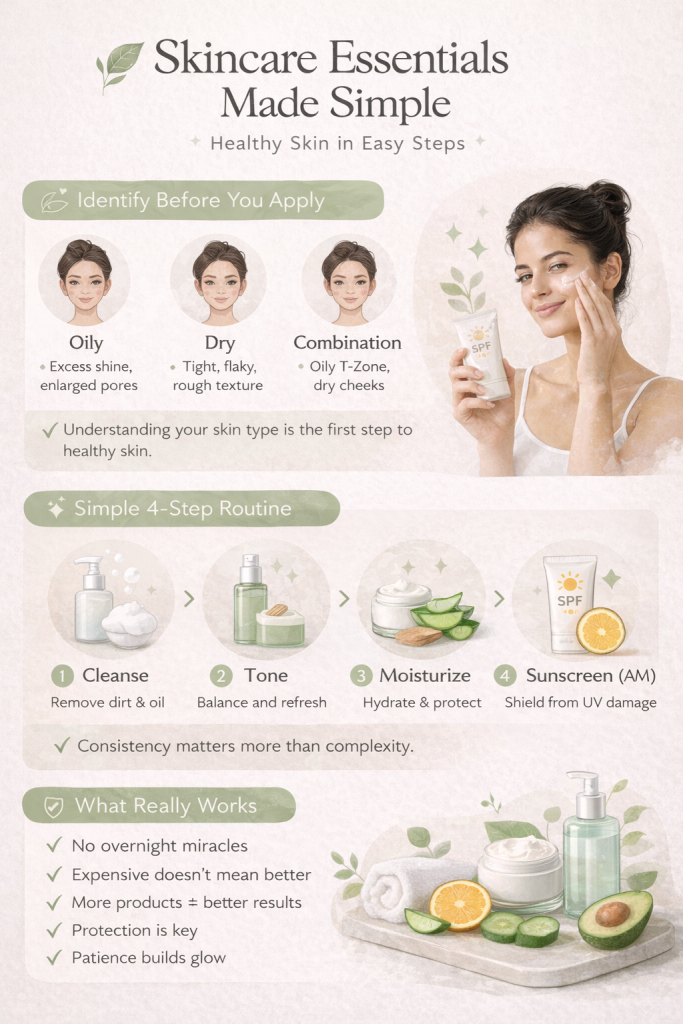
The sequence in which you apply products isn’t arbitrary—it’s based on science. The general rule is to apply products from thinnest to thickest consistency, which typically means: cleanser, toner, serums, moisturizer, and sunscreen (in the morning) or face oil (at night).
Water-based products should go on before oil-based ones because oil can create a barrier that prevents water-based ingredients from penetrating. Active ingredients like retinoids or acids should generally be applied to clean skin to maximize absorption, unless your skin is sensitive and needs a buffer of moisturizer first.
The Reality Check: What Skincare Can and Cannot Do
It’s crucial to have realistic expectations. Skincare can genuinely improve your skin’s health, texture, and appearance, but it has limits. No topical product can completely eliminate deep wrinkles, dramatically restructure your face, or reverse decades of sun damage. Skincare works through gradual improvement and prevention.
Most products require consistent use over weeks or months to show results. Your skin cells turn over approximately every 28 days, so you generally won’t see significant changes overnight. Retinoids may take three to six months to show full anti-aging benefits. Vitamin C can brighten skin in a few weeks but takes longer to impact fine lines.
The Role of Professional Treatments
While this article focuses on topical skincare, it’s worth noting that some skin concerns are better addressed through professional treatments. Deep wrinkles, significant volume loss, severe acne scarring, and profound sun damage often require in-office procedures like lasers, chemical peels, microneedling, or injectables to see substantial improvement.
Topical skincare works best for prevention, maintenance, and gradual improvement. Think of it as daily maintenance, while professional treatments are the renovation projects. The most effective approach often combines both: professional treatments for significant correction, and a solid at-home routine for prevention and maintenance of results.
The Bottom Line
Skincare absolutely works when you understand what different ingredients do, choose appropriate products for your skin type and concerns, and use them consistently and correctly. The key is education—knowing that hyaluronic acid hydrates the surface, retinoids stimulate cellular changes, antioxidants prevent damage, and sunscreen protects against future harm.
Rather than chasing every trending ingredient, focus on the proven basics: a gentle cleanser, a moisturizer suited to your skin type, sunscreen during the day, and perhaps one or two targeted treatments like retinol or vitamin C. This evidence-based approach will serve your skin far better than a bathroom shelf full of products you don’t understand.
Your skin is a living organ that responds to how you treat it. By understanding the science behind skincare, you can make informed decisions that lead to genuine, lasting improvements in your skin’s health and appearance.