
INGREDIENTS
FOR THE ORGAN YOUR WEAR IT EVERY DAY!


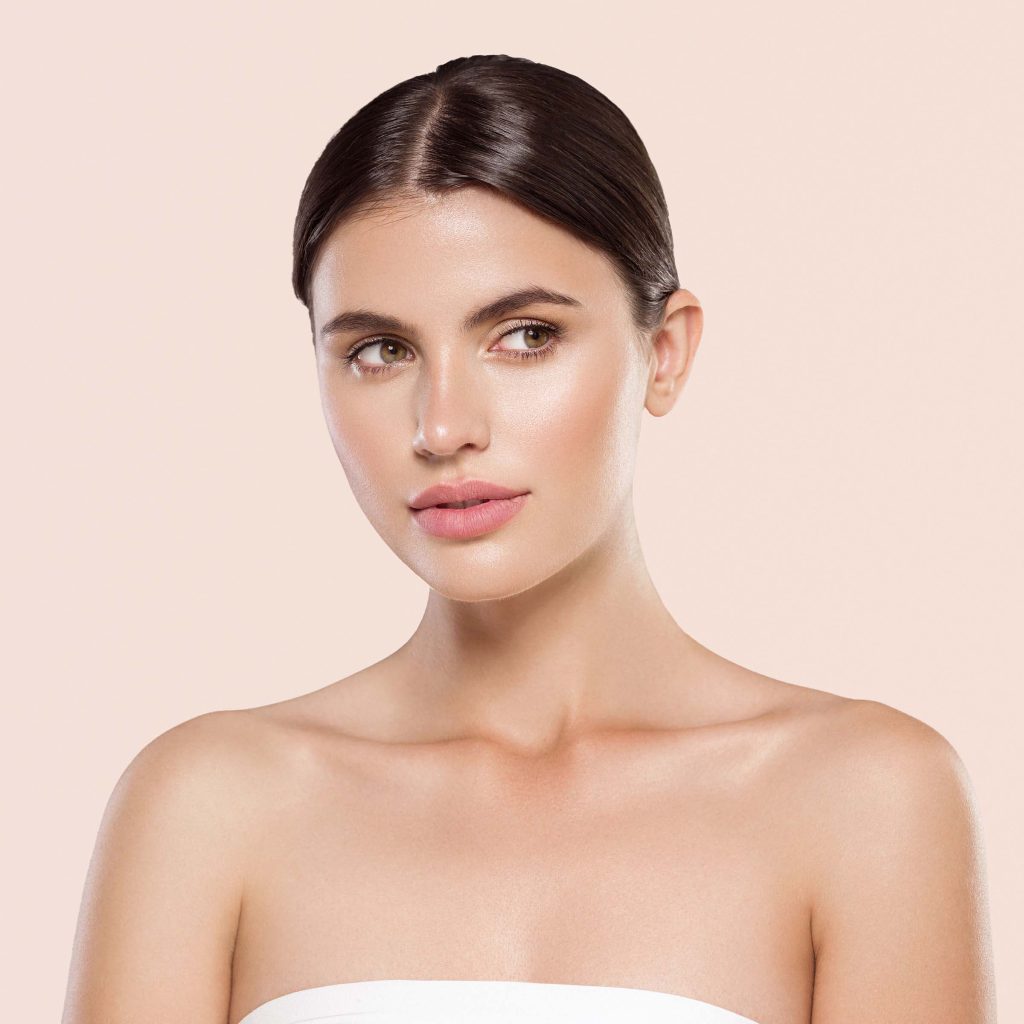
Believe Us You Can Be More Beautiful


The Language of the Label
A knowledgeable guide to the ingredients that actually transform your skin
Every jar, serum, and mist on a beauty shelf is essentially a cocktail of molecules making promises. Some keep them. Understanding what those molecules actually do — how they communicate with your skin’s biology — is the difference between a thoughtful routine and an expensive experiment.
The Skin Barrier
First, understand what you are working with
The skin is the body’s largest organ, a multi-layered system whose outermost surface — the stratum corneum — functions as a sophisticated fortress. Composed of dead, flattened cells called corneocytes embedded in a lipid matrix of ceramides, cholesterol, and fatty acids, this barrier is far from inert. It regulates water loss, deflects environmental aggressors, and moderates what enters the bloodstream. Every meaningful skincare ingredient either works on this surface, passes through it, or signals the living layers beneath. When we speak of a product “working,” we are really asking: did this molecule reach its target, and did something change?
Below the stratum corneum lies the epidermis, where keratinocytes are constantly born at the base and migrate upward, differentiating as they go. Deeper still sits the dermis, rich with fibroblasts that manufacture collagen, elastin, and hyaluronic acid — the structural proteins that give skin its density, rebound, and plumpness. The ingredients that command the most clinical attention are those proven to either penetrate to these deeper layers or robustly stimulate their activity from above.
Category One
Retinoids — the gold standard of anti-ageing
No class of ingredients has a more robust body of evidence behind it than retinoids, derivatives of vitamin A. The category spans a wide spectrum of potency: retinol (over-the-counter), retinaldehyde (also OTC but more active), and prescription-strength tretinoin or adapalene. All ultimately convert to retinoic acid, the biologically active form that binds to nuclear receptors in skin cells and directly alters gene expression.
The effects are remarkable in their breadth. Retinoids accelerate cellular turnover, pushing fresh keratinocytes to the surface and clearing dull, uneven texture. They stimulate fibroblasts to increase collagen synthesis, measurably thickening the dermis over months of use. They reduce the appearance of fine lines, fade hyperpigmentation, and — particularly at prescription strengths — treat acne by normalizing follicular keratinization. The trade-off is a well-known adjustment period of dryness, redness, and peeling as the skin acclimates. The solution is low concentrations, infrequent initial use, and unfailing application of moisturizer and SPF.
Retinol
OTC standard. Converts to retinoic acid in skin. Best for beginners; start at 0.025–0.1%.
Retinaldehyde
One conversion step from retinoic acid. More potent than retinol with less irritation than tretinoin.
Tretinoin
Prescription-only. Directly binds retinoic acid receptors. The most studied, fastest-acting form.
Bakuchiol
Plant-derived retinol alternative. Milder, suitable for sensitive skin. Evidence growing, not equivalent.
Category Two
Acids — exfoliation and beyond
The term “acid” in skincare covers an enormous functional range. Alpha-hydroxy acids (AHAs) such as glycolic acid, lactic acid, and mandelic acid dissolve the intercellular glue that holds dead skin cells together, promoting exfoliation, improving texture, and, at higher concentrations, stimulating collagen indirectly via mild wounding signals. Glycolic acid, with the smallest molecular weight, penetrates deepest and acts fastest. Lactic acid is gentler and also hygroscopic — it draws water to the skin — making it a dual-action exfoliant and humectant. Mandelic acid, derived from almonds, has the largest molecule in the AHA family and is the most suitable for sensitive or darker skin tones due to its reduced penetration and inflammation risk.
Beta-hydroxy acids, most notably salicylic acid, are oil-soluble. This single property makes salicylic acid uniquely suited to oily and acne-prone skin, because it can penetrate the sebum inside a pore rather than working only on the surface.
Polyhydroxy acids (PHAs), such as gluconolactone and lactobionic acid, represent the newest generation of exfoliating acids. Their larger molecular size restricts penetration to the very top layers of the stratum corneum, delivering gentle exfoliation that is well-tolerated by even rosacea-prone skin. Azelaic acid occupies a category of its own: a dicarboxylic acid with antimicrobial, anti-inflammatory, and tyrosinase-inhibiting properties that make it effective against acne, rosacea, and post-inflammatory hyperpigmentation simultaneously.
Category Three
Antioxidants — defence and brightening
Reactive oxygen species — free radicals generated by UV radiation, pollution, and metabolic processes — cause oxidative stress that degrades collagen, lipids, and DNA. Antioxidants neutralize these molecules by donating electrons, short-circuiting the damage cascade. Vitamin C (L-ascorbic acid) is the benchmark antioxidant in skincare, but its instability is notorious: it oxidizes on exposure to air and light, turning orange and losing efficacy. Formulations that work use concentrations between 10–20%, a pH below 3.5, and airtight, opaque packaging. The payoff is significant — clinical studies confirm that L-ascorbic acid brightens hyperpigmentation by inhibiting tyrosinase (the enzyme responsible for melanin synthesis), boosts collagen production, and provides measurable photoprotection when layered under SPF.
Vitamin E (tocopherol) is a fat-soluble antioxidant that works synergistically with vitamin C; together they are more effective than either alone. Niacinamide, or vitamin B3, is technically not an antioxidant but functions similarly as a multi-tasker: it reduces melanin transfer to keratinocytes (fading dark spots), strengthens the barrier by stimulating ceramide production, reduces sebum production in oily skin, and has anti-inflammatory properties relevant to both acne and rosacea. Few single ingredients have such a broad evidence base with so few side effects, which accounts for its near-universal recommendation.
Category Four
Humectants, emollients, and occlusives — the hydration trinity
Moisturizers are not a single ingredient but a system of three functional types working in concert. Humectants are hydrophilic molecules that attract and bind water — hyaluronic acid, glycerin, urea, and sodium PCA are the principal examples. Hyaluronic acid, a naturally occurring polysaccharide in the dermis, can hold up to a thousand times its weight in water, making it valuable for plumping and surface hydration. Critically, when applied in dry environments, it can pull water from the dermis rather than the atmosphere, paradoxically dehydrating skin — a reason to always follow humectants with an occlusive layer.
Emollients fill the microscopic gaps between corneocytes, smoothing texture and reinforcing barrier lipids. Ceramides — lipids structurally identical to those found naturally in the stratum corneum — are among the most therapeutically important emollients, especially for compromised or eczema-prone skin. Squalane, derived from sugarcane or olives, is a lightweight, stable oil with excellent skin compatibility. Fatty acids like linoleic acid are essential components the skin cannot synthesize; topical application replenishes barrier lipids directly. Occlusives — petrolatum, dimethicone, shea butter — sit on the surface and physically impede transepidermal water loss. Petrolatum, the most effective occlusive known, is non-comedogenic and has significant wound-healing benefits despite its unglamorous reputation.
Category Five
Peptides and growth factors — signalling molecules
Peptides are short chains of amino acids — the building blocks of protein — that function as cellular signalling molecules. In skincare, they operate through several mechanisms: some, like Matrixyl (palmitoyl pentapeptide-4), mimic fragments of degraded collagen and signal fibroblasts to produce more; others, like the copper peptides, have wound-healing and antioxidant properties. The challenge with peptides is delivery — many are too large to penetrate the stratum corneum effectively without a well-engineered vehicle. Growth factors, proteins that regulate cell proliferation and differentiation, represent an extension of this approach. Their clinical evidence is promising but less mature than that for retinoids, and their molecular size raises legitimate penetration questions that researchers continue to investigate.
A routine built on a broad-spectrum SPF 30 or higher, a reliable moisturizer, and a single active like vitamin C or retinol will outperform a 12-step collection assembled without understanding.
Conclusion
The architecture of a rational routine
The most common mistake in building a skincare routine is the assumption that more ingredients means more results. The opposite is frequently true: stacking active ingredients — particularly acids with retinoids, or multiple exfoliants simultaneously — can overwhelm the barrier, trigger irritation, and paradoxically worsen the concerns they are meant to address. A rational routine is an architecture, not an accumulation.
Sunscreen remains the single most evidence-backed intervention for preventing both photoageing and skin cancer; no serum or antioxidant replaces it. Moisturizer, calibrated to skin type, maintains the barrier that enables every other active to work safely. From there, the choice of active should be driven by primary concern — hyperpigmentation, texture, acne, or fine lines — applied one at a time, with patience measured in months, not days.
Understanding ingredients is ultimately an exercise in respecting skin’s biology rather than overriding it. The most effective formulations work with the skin’s own systems — stimulating collagen, reinforcing the barrier, neutralizing oxidative stress — rather than against them. Read the label not as marketing, but as a molecular map. Somewhere in that INCI list is the reason it works — or does not.